How to Capture Cinematic Aerial Footage: A Deep-Dive Review of the DJI Mini 4K
This post contains affiliate links(included). If you make a purchase through these links, I may earn a small commission at no extra cost to you.
If you have been looking to elevate your content creation, travel vlogs, or real estate photography, you have probably realized one thing: ground-level shots only get you so far. To truly stand out, you need to take to the skies. But navigating the drone market can be intimidating. Do you need a license? Is it hard to fly? How much will it cost?
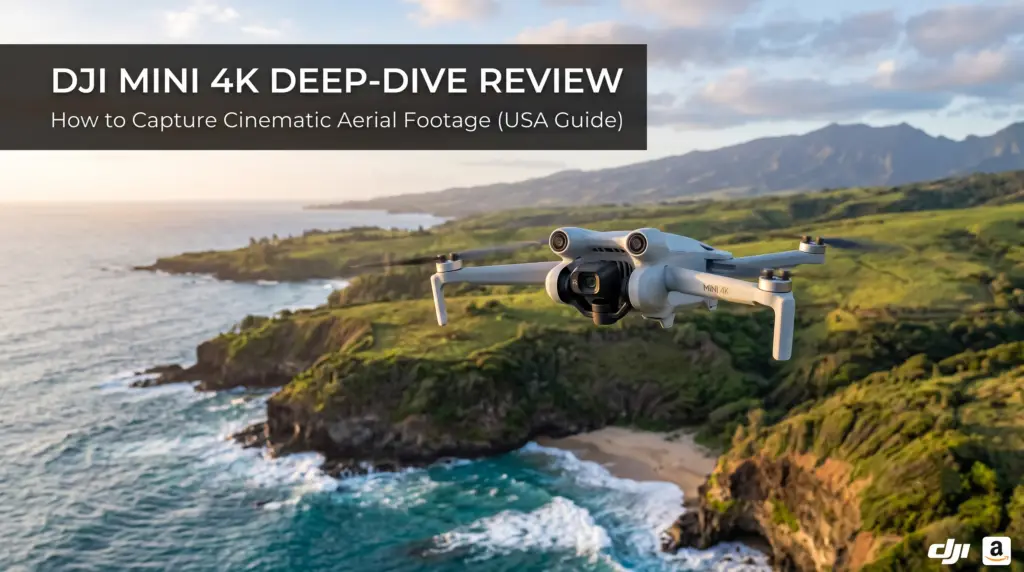
Enter the DJI Mini 4K Drone. In this comprehensive guide and review, we will show you exactly how this compact powerhouse can transform your videos without breaking the bank or requiring complicated regulatory paperwork.

1. How to Fly Legally (Without the FAA Red Tape)
One of the biggest hurdles for new drone pilots in the USA is dealing with the Federal Aviation Administration (FAA). Most heavy drones require formal registration, fees, and Remote ID compliance.
The Mini 4K Advantage: Weighing in at exactly under 249 grams, the DJI Mini 4K slips right under the FAA’s weight limit for recreational registration. You can literally unbox it, charge it, and start flying at the park without worrying about government paperwork holding you back.
2. How to Shoot Like a Pro (Even as a Beginner)
You don’t need a film degree to get Hollywood-style tracking shots. The DJI Mini 4K is built for absolute beginners but delivers professional-grade results.
- 4K Ultra HD Camera: Upgrading from the 2.7K of older budget models, this drone shoots stunningly crisp 4K resolution. Your sunsets, mountain peaks, and beach days will look incredibly sharp on large screens.
- 3-Axis Gimbal Stabilization: No more shaky, unusable footage. The mechanical gimbal ensures that even if the drone tilts to accelerate or fights the wind, your camera remains perfectly level.
- Intelligent QuickShots: Want a cinematic reveal for your vlog? Just tap the screen. The drone automatically performs complex maneuvers like Dronie, Helix, Rocket, Circle, and Boomerang, doing all the flying for you while keeping you perfectly centered in the frame.
3. Pushing the Limits: Range and Wind Resistance
There is nothing worse than sending your drone out over a lake and watching your video feed freeze.
Thanks to DJI’s advanced transmission technology, you get up to 10km (6.2 miles) of HD video transmission. While you must always keep your drone in your visual line of sight according to safety rules, this robust signal means you won’t suffer from dropped connections in complex environments with interference.
Furthermore, it handles Level 5 Wind Resistance (up to 38 kph / 24 mph). Your footage stays buttery smooth even when flying along breezy coastlines or at altitudes up to 4,000 meters.

4. How to Maximize Your Flight Time
Battery anxiety is a real issue for content creators. The base DJI Mini 4K offers a solid 31 minutes of max flight time per battery, which is plenty of time to scope out an area and get the perfect shot.
Pro Tip: Always launch with a full battery, and let the drone’s built-in Return to Home (RTH) feature guide it safely back to you if the battery gets critically low or if you lose connection.
Final Verdict: Is the DJI Mini 4K Worth It?
If you are looking for an affordable, high-quality drone that requires zero FAA registration for recreational use and captures breathtaking 4K footage, the DJI Mini 4K is currently the reigning champion of entry-level drones.
Whether you’re a seasoned photographer looking for a pocket-sized backup to keep in your glovebox, or a beginner buying your very first drone, this model delivers unbeatable value and reliability.